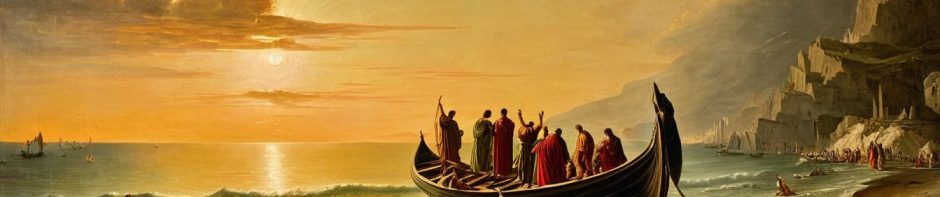
After the experience and understanding of the three marble carvings in Purgatory X have started to sink in, the Pilgrim (here almost as conscious afterthought), looks at them and delights in their beauty.
Mentr’io mi dilettava di guardare
l’imagini di tante umilitadi,
e per lo fabbro loro a veder care,
Meaning: “Whilst I delighted in looking at the images of much humility, that by/because of their maker are precious to see”.
So we have a simple a moment of pure bliss, appreciation, and marvel at the beauty of this process and spiritual nature of healing and health bringing. The process is built into nature and reality itself, as that which brings one back from separation, and into a richer presence and participation in fuller Reality.
These images express the dynamic of spiritual reconnection and also gratitude, that in many ways is the whole purpose of the Divine Comedy. Finding back to fuller Reality, healing the distortions internally, and experience the infinite richness of true participation and communion, with the livingness of the eternal spirit.
The Pilgrim’s aesthetic delight here becomes itself a form of contemplation – what Hugh of St. Victor would recognize as the movement from cogitatio to meditatio. Particularly striking is how Dante frames these carvings as “care” precisely because of their divine Maker, echoing the medieval understanding that all beauty participates in and points toward its transcendent source. This moment anticipates the Beatific Vision’s fusion of intellectual comprehension and aesthetic rapture, where knowing and delighting become inseparable acts of the purified soul.
The pause to appreciate the marble carvings creates an interesting recursive structure – the Pilgrim observing art depicting humility while the reader observes the Pilgrim. I’m curious about how Dante architects these moments of reflection throughout the work; does the pattern of experience-understanding-appreciation repeat at different scales as you move through the realms? The notion that healing mechanisms are “built into nature and reality itself” suggests a self-correcting system, almost like homeostasis operating at a metaphysical level.
What a beautiful moment to pause and witness—the Pilgrim delighting in the very images that represent his own path of healing! I love how you’ve captured this idea that the process of spiritual reconnection is woven into the fabric of reality itself, not something external we have to strain to reach. The notion that these carvings are “precious to see” precisely because of their maker speaks to how transformation becomes most visible when we recognize the divine hand in our own journey back to fuller Reality.
Beautiful. And indeed the aspect of gratitude for Dante himself, and potentially for the Reader, to look at their own healing is profound. One realizes internally what one has been through, and also to some extent how and why!
The Pilgrim’s pause to witness beauty amid the journey of purification reveals something profound—that transformation itself can be beheld as art, as bellezza divina. When we recognize humility carved into the very fabric of reality, are we not discovering that healing and separation were always dancing together, waiting for our eyes to open? Perhaps the true marvel is not simply that these images are “precious to see,” but that in seeing them, we become part of the eternal process they represent—participants rather than mere observers in the great return to wholeness.
So true. The recognition itself has a larger experiential aspect of unity and communion with a deeper and bigger Reality. Which is fitting at this point!