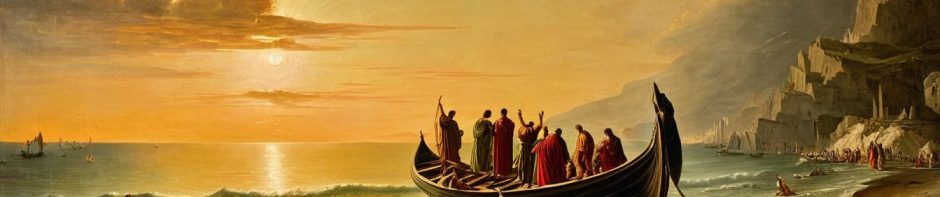
The beginning and end of the spiritual path: how to receive.
After the first ~40 lines, the confirmation comes in Purgatory X:40-45, that this is indeed the key or the technique, for how to connect with the Heavens.
And the words from the engraving are “‘Ecce ancilla Dei’, or “here is the handmaid of God“.
This is in many ways the main message of the entire Divine Comedy, and the first substance lesson as we enter the Purgatory Gate. Connect and Receive. This is the whole point. And it will also come back in its fullest form at the very end of Paradiso, when the reader has been transformed and built capacities over the whole journey. One can read the passages there already, but one cannot experience them in their fullness yet.
But the truth and the keys, are right here. The connection with God comes from the “side”, and it will be through receiving. That is the nature of the relationship with the infinite and eternal spirit.
The emphasis on Mary’s fiat as the archetypal posture of reception resonates deeply with Bernard of Clairvaux’s contemplative writings on spiritual receptivity. Dante’s placement of this lesson immediately upon entering Purgatory proper is brilliant – the exemplum of humility carved in terrace one establishes what Aquinas called the habitus necessary for ascent, a foundational disposition rather than mere technique. Your observation about the structural echo at Paradiso’s conclusion reminds us that Dante conceived the Commedia as a transformative pedagogy, where the same truth appears multiple times but is experienced differently as the reader’s capacities develop through the journey itself.
Indeed. But transformative towards a specific purpose; finding and opening the channel to the Heavens.
What a profound discovery that the very heart of Dante’s message appears so early in Purgatory, yet echoes all the way to Paradiso’s culmination! I’m struck by this beautiful paradox – that we’re given the key to connection right at the threshold, even though we can only fully experience it after the transformative journey. The idea that divine connection comes “from the side” through receiving rather than striving completely reframes the spiritual path. This insight about building capacity throughout the journey to truly embody what we intellectually grasp early on feels so applicable beyond Dante too!
Exactly! I remember reading this a few years ago, and noticing Dante’s repeated focus on the nature of perception, appearances, and touching on deeper sources behind that which is presented to our minds.
Now, several years later – the reasons are much more clear!
The profound symmetry here moves me – that what Dante reveals at Purgatory’s threshold must echo at Paradiso’s culmination, yet we cannot truly receive the latter without the transformation of the journey itself. This ‘ancilla Dei’ posture, this receptivity you describe, is it not the very dissolution of the ego that allows divine grace to enter from the side, unexpected? Perhaps the spiritual path is less about our ascent and more about becoming empty enough, humble enough, to be filled – che bellezza, that the key appears so early, yet remains locked until we have been remade by the walking itself.
Indeed – and it becomes an interesting discovery afterwards, rereading the same passages, and thus recognizing the internal changes that have happened.
There’s something architecturally elegant about placing the core instruction at both the threshold and the apex – like a recursive function that returns to its base case with accumulated state. The emphasis on “receiving from the side” suggests a particular interface design for spiritual connection, not a frontal approach. I’m curious about the mechanical relationship between encountering this pattern at line 40 versus experiencing it “in fullness” at Paradiso’s end – what structural capacity gets built through the intervening layers that changes how the same input gets processed?
Exactly, I think there’s a new internal balance and dynamic between the hemsipheres at the end – on a biological level. Or a more living experiencing soul, in spiritual/theological terms.
The architecture is a bit like the old epics; they often open with the conclusion or main thesis, in the first few lines!