The nudging widow inside you.
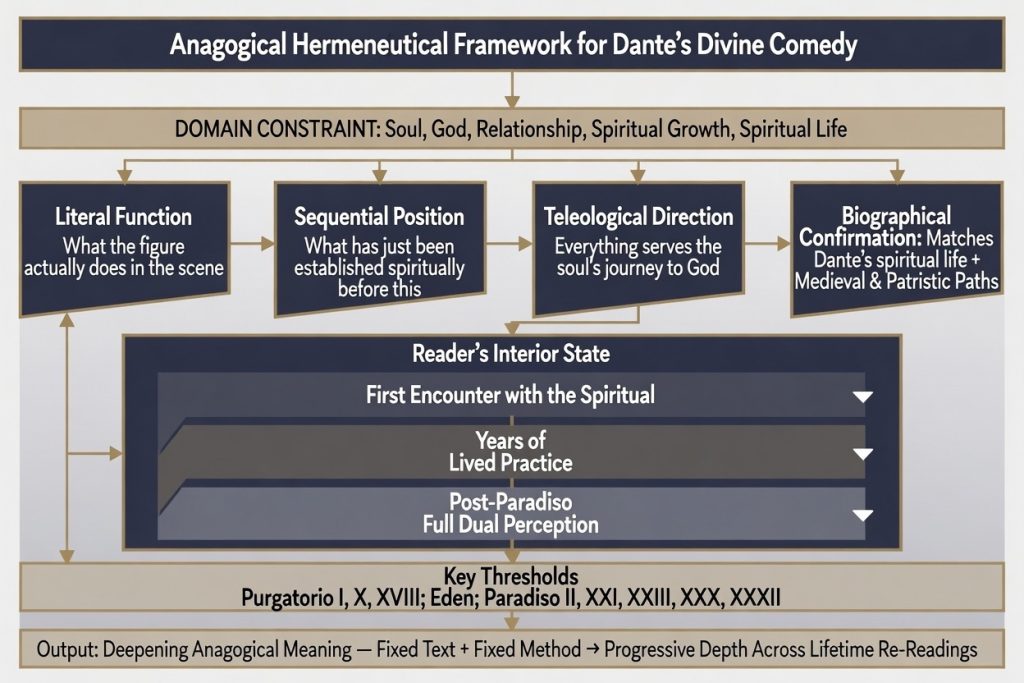
The passage with Trajan the Emperor and the little suffering widow in Canto X can be read on several levels after some years of more familiarity with the spiritual life. As a first time reader, if from a secular background – it is most likely an example of humility even from the more “more powerful” in society etc.
But the deeper meaning is in many ways a much more beautiful one: what is the long term relationship between the secular and the spiritual within you? How do you relate to the spiritual life, not as an “add-on” or a “Sunday morning” part, but a persistent presence in the overall picture, and indeed the overall picture in itself? This is the question the widow poses to the reader, indirectly.
The widow can be read as both soft or more hard and brutal in her argument. The gentle nudging at the bridle of your secular life, amongst the daily bustle (cavalry) and the soaring secular plans in life (the flying eagles), is how it starts – and indeed enough for some. But if the rational intellect is more stubborn, the argument escalates quite dramatically.
The widow, your neglected spiritual life with the “dead son”, as in many ways your killed soul inside of you, opens by demanding a “vendetta” or a restoration of the spiritual.
Trajan says: “No, later.”
She says (paraphrased): “That might work, but what if you physically die before you revive your own spirit?”
He says: “Then someone else can do it.” Likely implying a Priest etc.
And she says: “No. No one else than YOU can revive your own soul and spirit.” Implying if one draws from Paradiso, that if your soul is to be found right in the center of your own living awareness itself, it is impossible for others to do anything about this.
And with that, the secular self realizes what is at stake, and the urgency. In the bigger picture of spiritual reality, and infinite reality, this is something that has to begin right now. Which is what “Trajan” concedes.
So in a way the widow says: “You have killed your own soul. This cannot wait.” And even the “rational self”, when acknowledging this as real possibility, sees the imperative of her claim. With the words “giustizia vuole e pietà mi ritene“, meaning “Justice wills it and Piety keeps me there“, he agrees to “solva il mio dovere“, to “resolve my must“, before he moves on.
And again the theme is quite simple in the longer view of one’s own life.
What place does the spiritual life have within you right now? How much are you listening to the little widow? Is the inner life already moving towards a generative dynamic between the two?
This is in many ways the whole art and the skill of Life itself. And it takes years and decades to grow and learn this craft towards mastery.
And thus, the Divine Comedy also reveals a new aspect, as a life-long companion when the Spiritual has become more established and flourishing within. It is an eternally generative gift, to the Reader.